The artistry and engineering behind a soccer ball, often overlooked, profoundly impact the game’s dynamic. soccer ball design isn't merely aesthetic; it's a crucial element affecting performance, durability, and even player safety. From the panel configuration and seam construction to the materials used in its creation, every facet of a soccer ball's design contributes to its overall playability and longevity. Understanding these principles is essential for manufacturers, players, and anyone interested in the science of the beautiful game.
Globally, soccer (football) is the most popular sport, boasting over 3.5 billion fans according to FIFA. This widespread appeal necessitates consistent quality and innovation in equipment, with the soccer ball being central. The ISO 8744-1 standard, for example, dictates rigorous testing procedures for ball size, weight, shape, rebound, and water absorption – all direct results of sophisticated design considerations. Meeting these standards, and pushing beyond them, drives advancements in soccer ball design.
However, challenges remain. Maintaining consistent performance across varying climates and playing surfaces, and addressing concerns about sustainability in manufacturing, are ongoing issues. A deeper understanding of aerodynamic principles, material science, and manufacturing techniques is vital to create soccer balls that enhance the game for everyone.
The Significance of Soccer Ball Design
Effective soccer ball design is a delicate balance between artistry, engineering, and athletic performance. A well-designed ball enhances the gameplay experience for players of all levels. Subtle variations in panel shape, seam depth, and material composition can dramatically impact a ball's flight path, bounce consistency, and overall feel.
Beyond the on-field performance, design choices influence durability, weather resistance, and manufacturing costs. Innovations in materials, such as the use of polyurethane instead of PVC, can improve ball performance and environmental sustainability, further emphasizing the importance of thoughtful soccer ball design.
Defining Soccer Ball Design
At its core, soccer ball design encompasses the process of conceptualizing, engineering, and manufacturing a spherical object optimized for the sport of soccer. It goes beyond simply creating a round shape; it involves carefully selecting materials, determining the optimal number and arrangement of panels, and employing precise construction techniques.
Modern soccer ball design frequently incorporates advanced technologies like computer-aided design (CAD) and computational fluid dynamics (CFD) to simulate and refine aerodynamic properties. This allows designers to predict ball behavior under various conditions and optimize performance characteristics.
The connection to modern industry extends beyond sports equipment. The principles of material science, manufacturing precision, and aerodynamic optimization used in soccer ball design find applications in a wide range of industries, from aerospace to automotive engineering.
Key Factors in Soccer Ball Design
Several crucial factors influence the quality and performance of a soccer ball. Durability is paramount; a ball must withstand repeated impacts, abrasion, and varying weather conditions. Scalability refers to the ability to produce balls consistently and efficiently to meet global demand. Cost-efficiency is essential for making the sport accessible to all.
Aerodynamic performance directly impacts the ball’s flight characteristics, including speed, accuracy, and stability. Weight distribution and seam construction play vital roles in achieving optimal aerodynamics. Furthermore, the responsiveness and tactile feel of the ball are essential for player control and precision.
Finally, regulatory compliance with standards like ISO 8744-1 is non-negotiable. These standards ensure that balls meet minimum requirements for size, weight, shape, rebound, and water absorption, guaranteeing fair play and player safety.
Materials and Construction
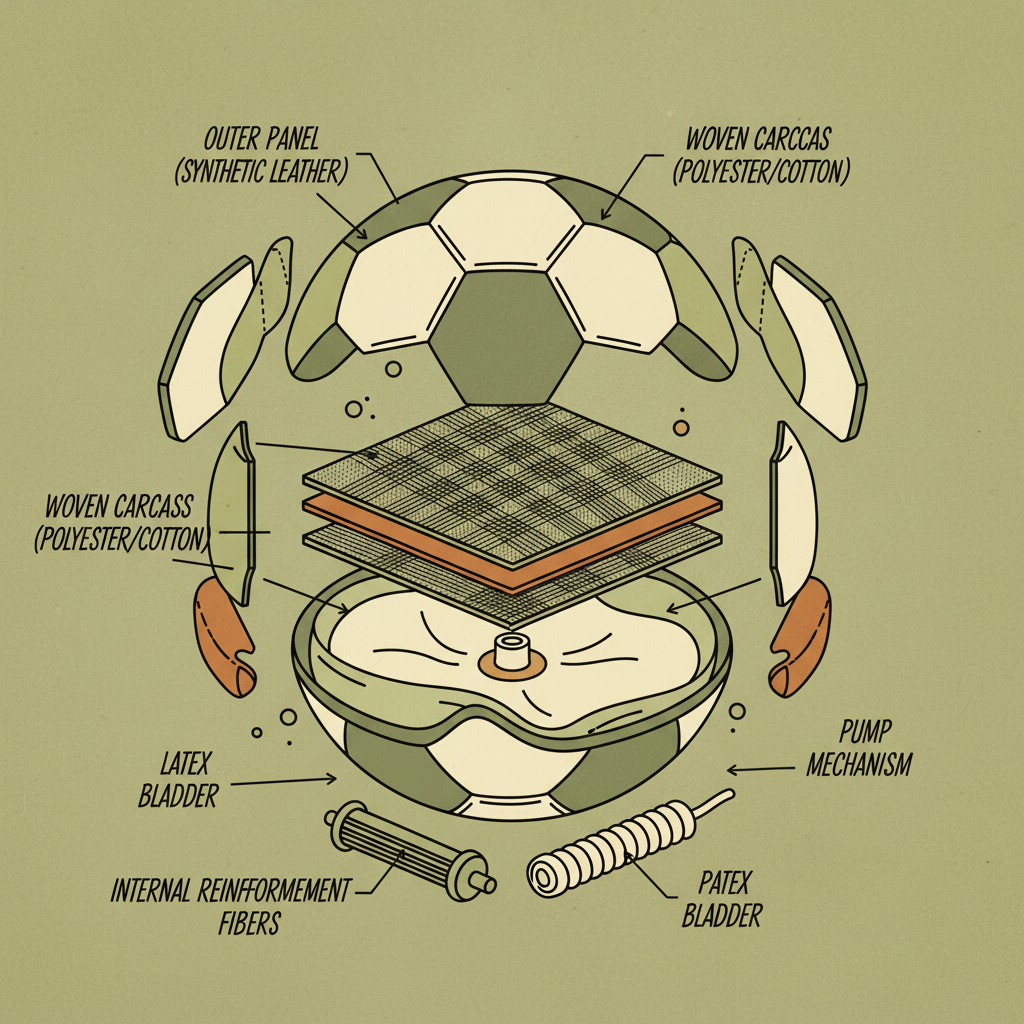
Traditionally, soccer balls were constructed from leather panels stitched together. However, modern soccer ball design largely relies on synthetic materials like polyurethane (PU) and polyvinyl chloride (PVC). PU offers superior softness, durability, and water resistance compared to PVC, making it the preferred choice for professional-level balls.
Panel construction has evolved significantly over time. The classic 32-panel design, popularized by the Adidas Tango, remains a common choice, but innovative designs utilizing fewer panels or unique panel shapes are increasingly prevalent. Thermally bonded seams, replacing traditional stitching, create a seamless surface, reducing water absorption and improving aerodynamics.
Material Performance in Soccer Ball Design
Aerodynamics and Flight Characteristics
A soccer ball’s aerodynamic performance hinges on its surface texture and panel configuration. The dimples, or surface irregularities, on some balls create a thin turbulent boundary layer, reducing drag and increasing lift, similar to the effect seen on golf balls. This leads to more stable and predictable flight paths.
Panel shape and seam design also play crucial roles. Panels with curved shapes, and seams that are flush or minimally raised, reduce air resistance. Advanced designs leverage computational fluid dynamics to optimize panel arrangements for improved accuracy and distance.
Global Applications and Standards
FIFA’s Quality Programme and the International Football Association Board (IFAB) standards dictate rigorous testing protocols for soccer balls used in professional matches. These tests evaluate size, weight, shape, rebound, water absorption, and other critical performance characteristics. Adherence to these standards ensures fair play and consistency across all levels of competition.
Beyond professional leagues, soccer ball design impacts grassroots programs and recreational play worldwide. Affordable, durable balls are essential for promoting the sport in developing countries and underserved communities, fostering physical activity and social inclusion.
Organizations like FIFA often collaborate with manufacturers to develop balls tailored to specific climates and playing surfaces, ensuring optimal performance in diverse environments.
Future Trends and Innovations in Soccer Ball Design
The future of soccer ball design lies in sustainable materials, smart technologies, and personalized performance. Researchers are exploring bio-based polymers and recycled materials to reduce the environmental impact of ball manufacturing.
“Smart” soccer balls, equipped with sensors and connectivity features, are emerging. These balls can track speed, spin, trajectory, and impact force, providing valuable data for player training and performance analysis. Digital integration is poised to revolutionize how players interact with the game.
Furthermore, advancements in 3D printing and customized manufacturing techniques could enable the creation of soccer balls tailored to individual player preferences and skill levels, optimizing performance and comfort.
Key Trends in Soccer Ball Design Materials
| Material Type |
Durability Rating (1-10) |
Sustainability Impact |
Cost Factor (Low, Medium, High) |
| Polyurethane (PU) |
9 |
Medium |
Medium |
| Polyvinyl Chloride (PVC) |
6 |
Low |
Low |
| Bio-Based Polymers |
7 |
High |
High |
| Recycled Materials |
7 |
Very High |
Medium |
| Thermoplastic Polyurethane (TPU) |
8 |
Medium |
Medium-High |
| Leather (Traditional) |
5 |
Low |
High |
FAQS
FIFA Quality Pro certification signifies that a soccer ball has undergone rigorous testing to meet the highest standards for professional play. This includes assessments of size, weight, shape, rebound, water absorption, and pressure retention. Balls with this certification offer consistent performance and are approved for official FIFA and UEFA matches, ensuring fair play and player safety.
The number and shape of panels directly influence a soccer ball’s aerodynamic properties. Traditionally, 32 panels were standard, but designs with fewer panels, or uniquely shaped panels, can reduce air resistance and improve stability. Fewer seams mean less drag, resulting in a faster and more predictable flight path. Modern soccer ball design often prioritizes minimizing seam length.
Polyurethane (PU) is a premium material offering superior softness, durability, and water resistance compared to Polyvinyl Chloride (PVC). PU balls provide a better touch and maintain their shape and performance longer, making them ideal for professional use. PVC is more affordable but less durable and can become hard in cold weather.
The bladder is crucial for maintaining air pressure and shape. Latex bladders offer excellent feel and responsiveness but require more frequent inflation. Butyl bladders retain air better, reducing the need for inflation, but may have a slightly harder feel. Choosing the right bladder material depends on the desired performance characteristics.
Yes, there’s a growing focus on sustainable materials. Bio-based polymers, recycled rubber, and eco-friendly adhesives are gaining traction. Manufacturers are exploring alternatives to PVC and reducing waste in the production process, aiming for a lower environmental impact without compromising performance.
Seam construction significantly impacts water absorption and aerodynamic drag. Traditionally stitched seams can allow water to penetrate, affecting weight and performance. Thermally bonded seams create a seamless surface, minimizing water absorption and reducing air resistance, leading to a more stable and predictable flight.
Conclusion
In conclusion, soccer ball design is a multifaceted discipline, blending art, science, and engineering to create an object that fundamentally shapes the world’s most popular sport. From material selection and panel configuration to aerodynamic optimization and adherence to rigorous standards, every aspect of the design process contributes to performance, durability, and player experience. Continual innovation in this field is essential for enhancing the game for players of all levels.
Looking ahead, the integration of sustainable materials, smart technologies, and personalized manufacturing techniques holds immense potential. By embracing these advancements, we can create soccer balls that are not only high-performing but also environmentally responsible and tailored to individual needs. Visit our website at www.starryballs.com to explore the latest innovations in soccer ball design and discover how we’re shaping the future of the game.